How Many Bags of Sand for Pavers? Bags vs. Bulk for Every Patio Size
Need Exact Math for Your Project?
Launch our free online tool: Sand Calculator & Estimator
How Many Bags of Sand for Pavers — Assembly Anatomy
Interactive 3D Isometric Engineering Rig • Verified Model
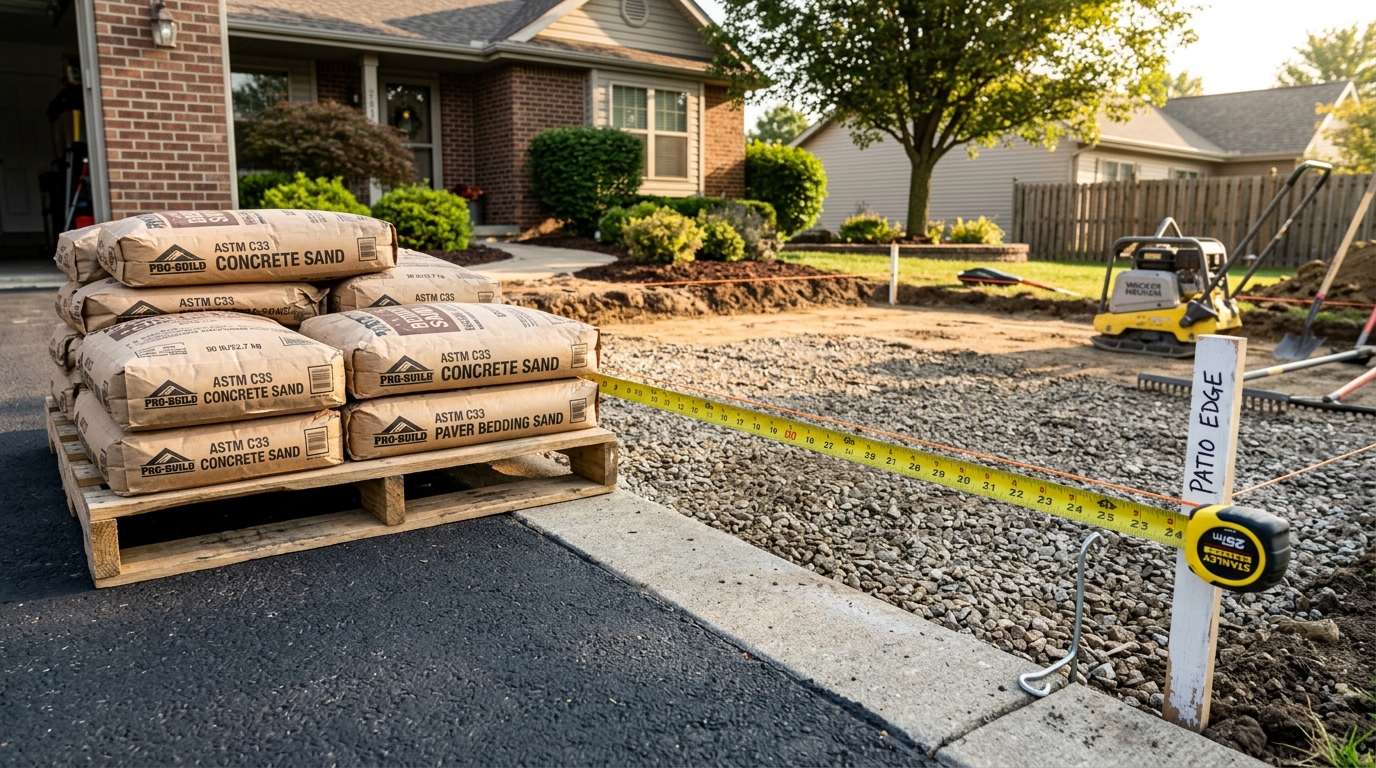
You're standing in the Home Depot sand aisle, staring at a wall of 50-lb bags, wondering how many to load on the cart. Sound familiar? I've been there — not as a weekend warrior, but as the guy who's bought thousands of bags of sand for pavers over 15+ years of hardscaping. And I can tell you the worst feeling is making a second trip because you came up short.
This guide gives you the exact bag counts for 10 common patio sizes, walks through the math so you can calculate paver sand for any project, and shows you when ditching bags for a bulk delivery saves serious money.
TL;DR — A standard 50-lb bag covers roughly 0.5 cubic feet. For a 1-inch bedding layer, take your square footage, divide by 6, and that's your bag count (before the 10% waste buffer). Or skip the math entirely and plug your dimensions into our Sand Calculator.
Quick Answer — Bags of Sand for Common Patio Sizes

Here's the table I wish someone had handed me on my first paver job. It assumes a standard 1-inch sand bedding depth using 50-lb bags of ASTM C33 concrete sand (each bag ≈ 0.5 cu ft).
| Patio Size | Square Feet | Cu Ft of Sand (1" depth) | 50-lb Bags Needed (with 10% extra) |
|---|---|---|---|
| 8 × 10 | 80 | 6.7 | 15 |
| 10 × 10 | 100 | 8.3 | 19 |
| 10 × 12 | 120 | 10.0 | 22 |
| 10 × 15 | 150 | 12.5 | 28 |
| 12 × 12 | 144 | 12.0 | 27 |
| 12 × 15 | 180 | 15.0 | 33 |
| 15 × 15 | 225 | 18.75 | 42 |
| 15 × 20 | 300 | 25.0 | 55 |
| 20 × 20 | 400 | 33.3 | 74 |
| 20 × 25 | 500 | 41.7 | 92 |
Don't see your exact dimensions? Odd shapes, L-patios, and curved walkways won't fit a simple table. Get a precise number → Sand Calculator.
How We Calculated These Numbers
The formula behind every row in that table is straightforward:
- Area (sq ft) × Depth (in inches) ÷ 12 = Cubic Feet of sand
- Cubic Feet × 2 = Number of 50-lb bags (since each bag holds ~0.5 cu ft)
- Multiply by 1.10 to add a 10% buffer for compaction, screeding waste, and uneven subgrade.
That's it. Three steps. If you want the full deep-dive into the math — including how depth changes affect everything and unit conversions for bulk orders — check out our complete guide on how to calculate paver sand.
One 50-lb bag of concrete sand for pavers covers roughly 3 square feet at a 1-inch depth. It's a handy mental shortcut when you're standing in the aisle doing napkin math.
The 15×20 Patio — A Detailed Example

Let me walk through a real scenario I see all the time: a 15-by-20-foot backyard patio. That's 300 square feet — big enough for a grill station, dining table, and a couple of lounge chairs.
Step 1: Calculate cubic feet
300 sq ft × 1 inch ÷ 12 = 25 cubic feet
Step 2: Convert to bags
25 cu ft × 2 = 50 bags
Step 3: Add 10% waste buffer
50 × 1.10 = 55 bags
Total weight on your truck?
55 bags × 50 lbs = 2,750 lbs — that's nearly a ton and a half. If you're driving a half-ton pickup, you're looking at two heavily loaded trips. Something to think about before you default to bagged sand for paver base projects this size.
That diagram really tells the story. At 300 square feet, the bags-vs.-bulk question starts answering itself. Need the exact numbers for your patio footprint? Run it through the Sand Calculator — it handles the conversions and waste factor automatically.
When to Skip Bags and Order Bulk
Here's the decision I walk every homeowner through. Bags of sand for pavers make sense for small jobs — walkways, stoop landings, fire pit pads. But there's a tipping point where bulk saves you 40–60%, and it's lower than most people think.
Cost Comparison: 15×20 Patio (300 sq ft)
| Bagged Sand | Bulk Sand | |
|---|---|---|
| Volume needed | 25 cu ft (~55 bags w/ extra) | ~1 cu yd (27 cu ft) |
| Material cost | 55 bags × $5 = $275 | 1 yd × $40 = $40 |
| Delivery | Your truck + gas | $50 delivery fee |
| Total | ~$275+ | ~$90 |
| Savings | — | ~$185 (67%) |
The math doesn't lie. Once you're past about 0.75 cubic yards of sand for paver base, bulk delivery almost always wins. I've had customers tell me they spent more on ibuprofen after loading 50+ bags than they would've spent on a bulk delivery. If you're sourcing paver base sand in volume, bulk is the way to go.
For a deeper look at calculating both bagged and bulk quantities, our guide on how to calculate paver sand covers every scenario.
What Kind of Sand Should Be in Those Bags?
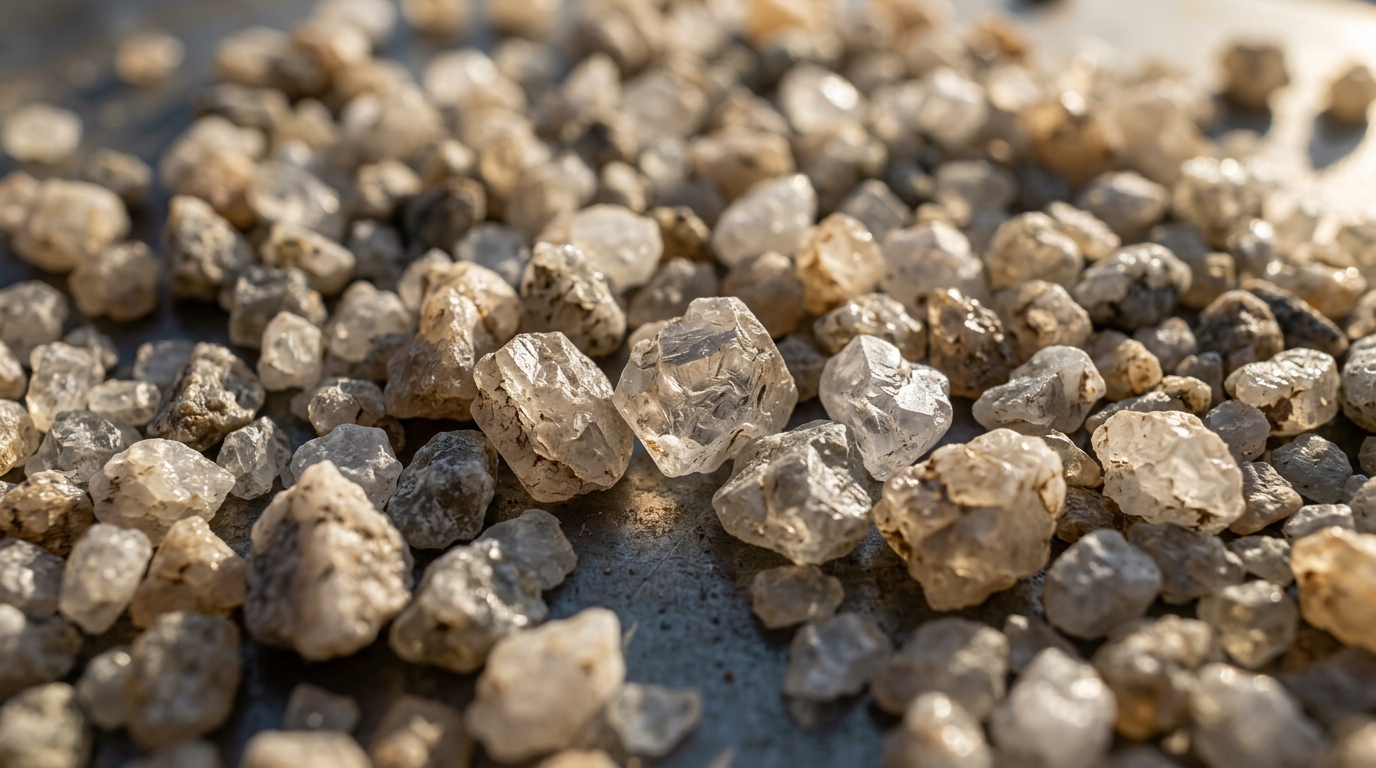
This matters more than the quantity. The wrong sand will wreck a patio no matter how perfectly you calculate paver sand amounts.
Use: ASTM C33 concrete sand — sometimes labeled "coarse concrete sand" or "C33 bedding sand." It's angular, well-graded, and locks together under pavers like puzzle pieces. That gritty, sharp feel when you rub it between your fingers? That's the angularity doing its job.
Don't use:
- ❌ Play sand — too fine, too round, holds water, shifts under load
- ❌ All-purpose sand — vague label, inconsistent gradation
- ❌ Mason sand — too smooth, too many fines
- ❌ Stone dust — traps water, turns to mud, ICPI explicitly warns against it
I've torn out patios where someone used play sand because the bag said "sand" and it was cheaper. Two winters later, pavers looked like a roller coaster. Concrete sand for pavers isn't a suggestion — it's the standard.
Want the full breakdown on why the right sand matters? Read our complete guide to concrete sand for pavers and learn why stone dust fails under pavers. For ASTM C33 specifications in detail, see our bedding sand for pavers guide.
Pro Tips for Buying Bagged Sand
After years of buying, hauling, and stacking bags of sand for pavers, here's what I've learned the hard way:
- Buy 2–3 extra bags. Seriously. You can return unopened bags to most big-box stores. Running short mid-screed means stopping work, driving to the store, and losing your rhythm — and possibly your level.
- Check the label for ASTM C33. Not all bags labeled "paver sand" actually meet the specification. Flip it over. If it doesn't reference ASTM C33 or "concrete sand," put it back.
- Store bags on pallets, off the ground. Sand bags sitting on wet ground wick moisture, get heavy, and can burst when you lift them. I stack mine on scrap lumber or a pallet, covered with a tarp.
- Above 0.75 cu yd, go bulk. That's roughly 40 bags. Past this point, you're paying a significant premium for the convenience of a bag. Call a local landscape supply yard — most deliver for $40–60.
- Weigh your vehicle capacity. A standard pickup bed holds about 1,500–2,000 lbs safely. At 50 lbs per bag, 30 bags = 1,500 lbs. Plan your trips accordingly. Don't be the person with the sagging rear axle on the highway.
Before you head to the store, use the Sand Calculator to get your exact bag count. Print it out or screenshot it — future you will be grateful.
Once you've got your paver base sand home and your base is compacted, you'll need to screed that sand perfectly flat. Our guide on how to level sand for pavers walks you through the screeding process step by step.
Frequently Asked Questions
How many 50-lb bags of sand do I need for a 10×10 paver patio?
For a 10×10 patio (100 sq ft) with a 1-inch bedding layer, you need approximately 17 bags — but I'd buy 19 to account for the 10% waste factor. Each 50-lb bag covers about 0.5 cubic feet, and you need 8.3 cubic feet total. It's always better to have a couple extras than to stop mid-project.
Is bagged sand or bulk sand better for pavers?
It depends on project size. For patios under 150 sq ft (roughly 28 bags), bagged sand is convenient and you avoid delivery fees. Above 150 sq ft, bulk sand saves 40–60% on cost. For a 300 sq ft patio, bags cost around $275 versus $90 for bulk delivery. Calculate paver sand quantities first, then decide.
Can I use any sand in bags for pavers?
No. You specifically need ASTM C33 concrete sand for pavers. Bags labeled "play sand," "all-purpose sand," or "mason sand" have the wrong particle shape, size, or gradation for paver bedding. Always check the bag label for the C33 specification or the words "coarse concrete sand." The wrong sand leads to settling, poor drainage, and paver failure.
How many bags of sand do I need for paver joints?
Joint sand is a completely different product from bedding sand. For joint filling, you'll use polymeric sand, which comes in smaller bags (typically 40–50 lbs) and covers 25–75 sq ft per bag depending on paver size and joint width. This article covers bedding sand — the layer under your pavers. Don't confuse the two.
Still doing math in your head? Let the Sand Calculator handle it — enter your patio dimensions, pick your sand depth, and get an instant bag count with waste factor built in.
Compare Quotes from Licensed Landscaping Contractors
Don't want to DIY? Connect with pre-screened local trade professionals verified for active state licensing, general liability insurance, and proven customer satisfaction.
Specializing in construction cost verification, code compliance, and civil engineering benchmarks for SpanSizer.